


Supreme Court rejects Trump's birthright citizenship order in major blow
Supreme Court rejects Trump's birthright citizenship order in major blow

Maureen Groppe, USA TODAYTue, June 30, 2026 at 2:35 PM UTC
1K
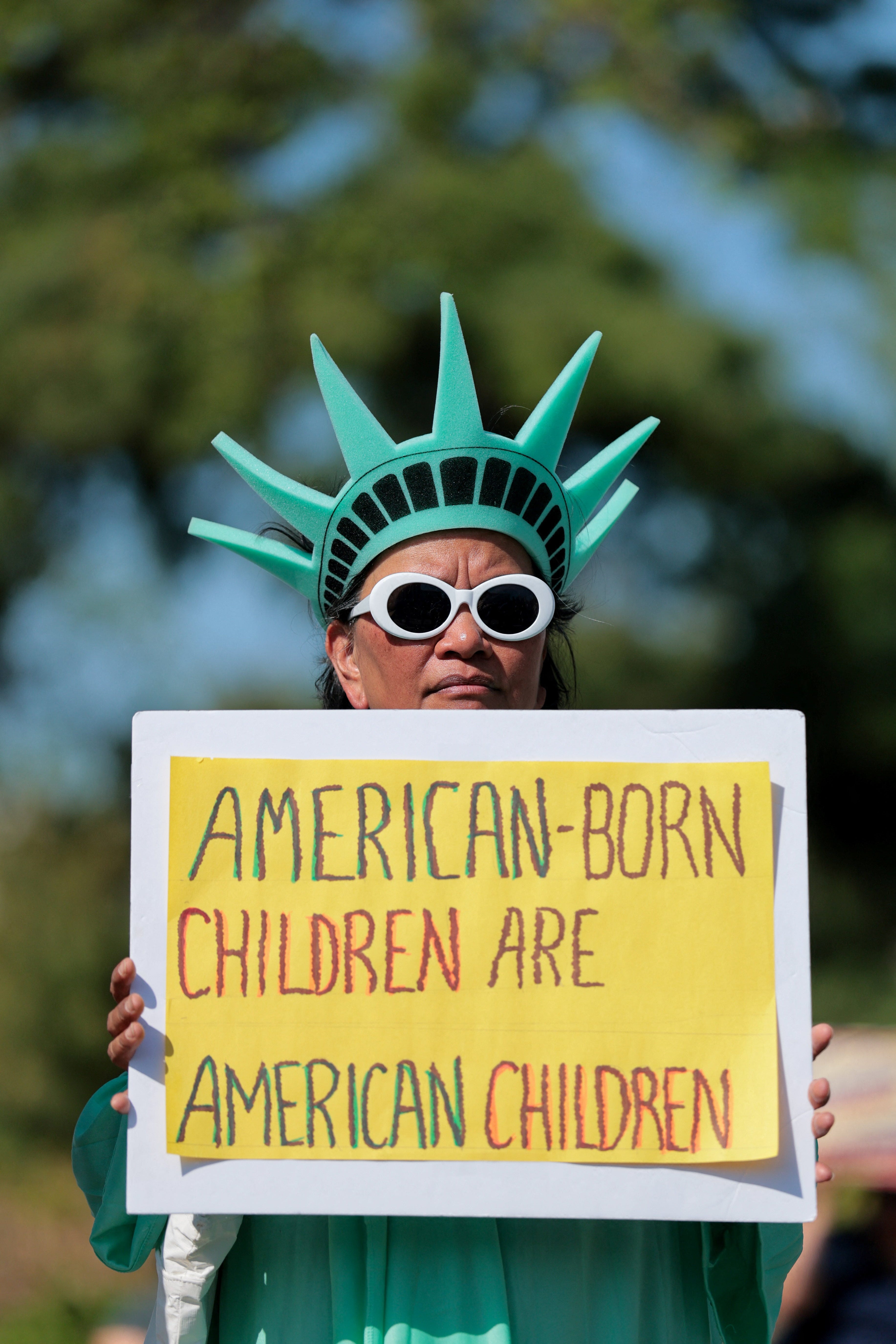
WASHINGTON – The Supreme Court on June 30 rejected President Donald Trump’s attempt to redefine who is an American, striking down the limits on birthright citizenship that were a centerpiece of his hardline approach to immigration.
The 6-3 ruling landed as the nation is gearing up to celebrate its 250th anniversary, adding to the significance of a case that was already a blockbuster.
And it came months after the court killed Trump’s signature tariffs, another repudiation of the expansive authority Trump has claimed since returning to the White House last year.
But in other immigration cases, including last week’s ruling allowing Trump to end deportation protections for hundreds of thousands of immigrants, the justices backed the president’s authority.
Live updates: Birthright citizenship upheld as Supreme Court deals Trump a loss
In their latest decision, however, the justices said Trump cannot change the definition of birthright citizenship with the stroke of a pen. Trump's push to make that change upended how the constitutional guarantee – long considered a bedrock American principle – had historically been understood.
Writing for the majority, Chief Justice John Roberts said children born to parents who are unlawfully or temporarily in the United States satisfy the citizenship clause of the 14th Amendment.
"Citizenship, then and now, was the right to have rights − to freely participate in our political community," Roberts wrote. "The Framers of the Fourteenth Amendment extended that promise to 'every free-born person in this land.' We keep that promise today."
Three of the court's other conservatives − Justices Clarence Thomas, Samuel Alito and Neil Gorsuch − dissented.
Thomas said the decision "devalues" American citizenship and is unlikely to "stand the test of time."
Justice Brett Kavanaugh, another conservative and a Trump appointee, said he would have ruled against the order on a narrower ground.
Kavanaugh said the order does run afoul of a 1952 immigration law but does not violate the 14th Amendment
“As revealed by the Court’s opinion with its detailed account of history and precedent, and by the weighty and thoughtful dissents, the constitutional issue is far more complicated than the statutory issue,” Kavanaugh wrote. “After reading those scholarly opinions, one thing seems evident: The constitutional issue is not straightforward, much as we might want it to be.”
Trump's inauguration day birthright citizenship order was blocked immediately
On his first day back in office, Trump directed federal agencies not to recognize the citizenship of babies born in the United States who do not have at least one parent who is an American citizen or lawful permanent resident – also known as a "green card" holder.
Trump’s order was immediately challenged through multiple lawsuits filed by expectant parents, immigrant rights groups and 22 state attorneys general.
The Supreme Court took up Trump's birthright citizenship executive order last year, but only to decide whether lower courts had gone too far in blocking its implementation while the order was being litigated. In that 6-3 decision, the court rejected the way judges had put Trump's order on ice but left open another path.
And a federal judge in New Hampshire soon blocked the citizenship order again, ruling it likely violated the citizenship clause of the 14th Amendment and a federal law that codified those rights.
Take a look: US isn't the only country to offer birthright citizenship
Trump campaigned on limiting birthright citizenship
Trump, who campaigned on restricting birthright citizenship and attended the April oral arguments in a first for a sitting president, argued that the citizenship clause has been misinterpreted. He said it should not apply to children born to parents who aren’t citizens or permanent residents, because they may feel loyal to a foreign country even if they have to follow U.S. laws while they’re here.
A historic first: Muffled gasps, first-row seat, and Supreme Court tensions: Trump birthright case
"No Country can be successful with such an anchor wrapped firmly around its neck," Trump wrote on social media in April.
Advertisement
The president also argued a landmark 1898 Supreme Court decision about the 14th Amendment applied to children whose parents had a "permanent domicile and residence in the United States" − an interpretation that "protects the meaning and value" of American citizenship.
'Foundational to who we are as a nation'
The American Civil Liberties Union, which represented the immigrants who challenged the executive order, called birthright citizenship "foundational to who we are as a nation."
"Ask any American what our citizenship rule is and they'll tell you, everyone born here is a citizen alike," Cecillia Wang, the ACLU's national legal director, told the justices in her oral argument. "The 14th Amendment's fixed bright-line rule has contributed to the growth and thriving of our nation."
Wang herself is a citizen due to that constitutional guarantee because her Taiwanese parents were in the United States on student visas when she was born.
Under Trump's policy, roughly 255,000 children born on U.S. soil each year would start life without U.S. citizenship, according to the Migration Policy Institute. That’s about 6% of all projected births.
By the numbers: How many people gain US citizenship by birthright?
Expectant mothers challenged Trump's order
The parents representing their children in the lawsuit, Trump v. Barbara, include a woman from Honduras who has lived in the United States since 2024 and gave birth months after Trump signed his executive order.
Identified by the pseudonym "Barbara," the woman said in court filings that she’s seeking asylum from gang activity in Honduras, and her family has become part of the local community in New Hampshire.
Another mother who challenged the order came to the United States from Taiwan in 2013 on a student visa and is applying for a work visa. She and her husband have four children, three born in the United States before Trump’s executive order and one born after.
"My husband and I ended up building a life here," the woman, known as "Susan," said in a court filing. "My baby has the right to citizenship and a future in the United States."
More: What history reveals about Trump’s move to limit birthright citizenship
What the citizenship clause says
The 14th Amendment − one of a trio of constitutional amendments adopted after the Civil War − overrode the Supreme Court’s infamous 1857 Dred Scott decision that enslaved and free Black people could not be citizens.
But the citizenship clause isn't limited to the status of Black people.
The amendment states: "All persons born or naturalized in the United States, and subject to the jurisdiction thereof, are citizens of the United States and of the State wherein they reside."
More: USA Happy Baby, birth tourism and a blockbuster Supreme Court case
During the oral arguments, conservative justices addressed – but dismissed – policy arguments Trump made for limiting birthright citizenship. Those included the president’s claim that "birth tourism" – the practice of pregnant women coming to the United States to give birth so their babies will be citizens – is a major threat to national security and an incentive for illegal immigration.
When Solicitor General John Sauer told the justices that’s the "new world" to which the citizenship clause applies, Roberts responded that such concerns "have no impact on the legal analysis before us."
"It's a new world," Roberts said. "It's the same Constitution."
This article originally appeared on USA TODAY: Supreme Court rejects Trump's birthright citizenship changes
Source: “AOL Breaking”
