


Measles Cases Are Rising—Do You Need a Booster Shot to Stay Safe?
Measles Cases Are Rising—Do You Need a Booster Shot to Stay Safe?

Korin MillerFri, August 28, 2026 at 11:32 AM UTC
6
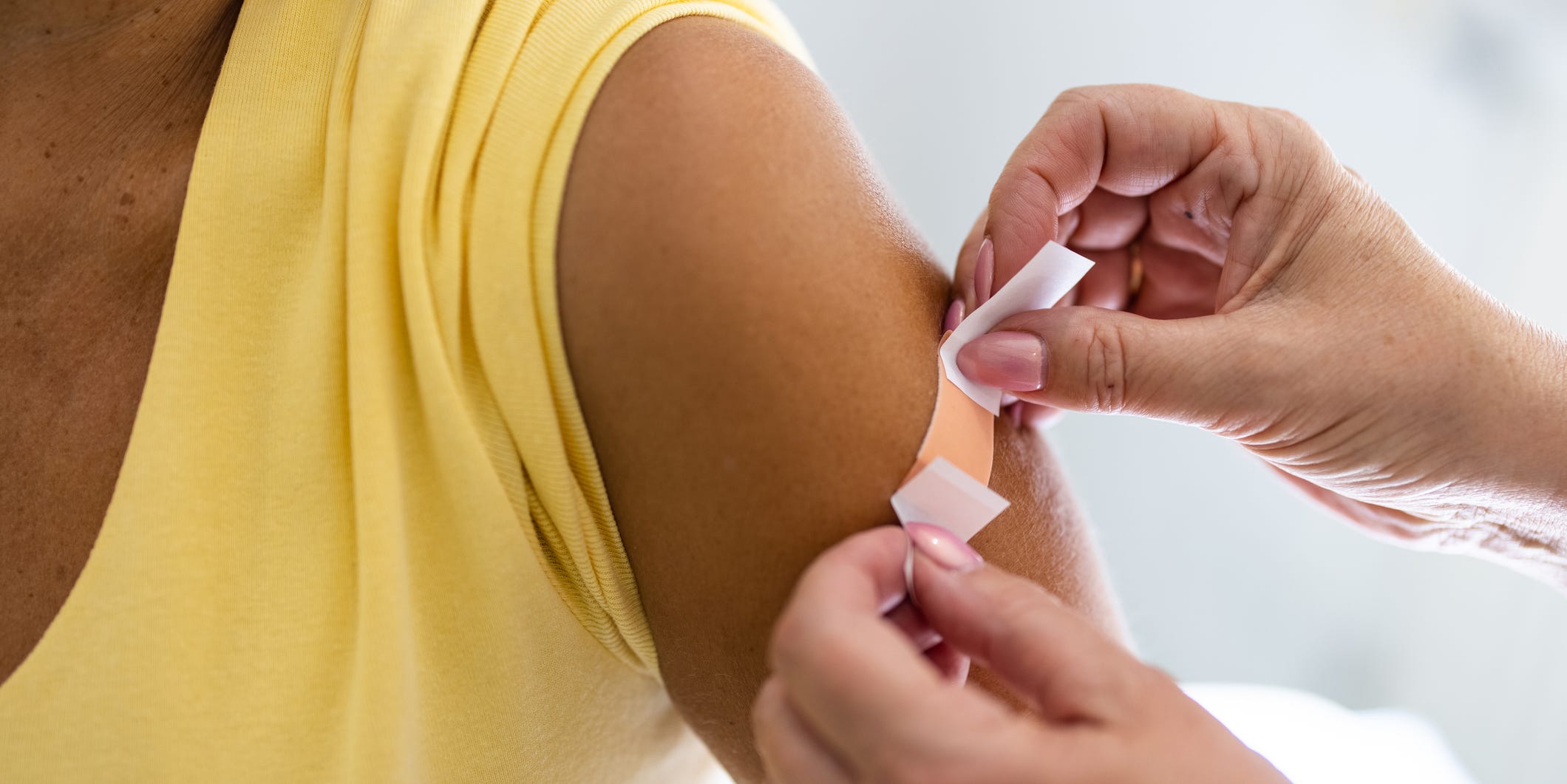
Do You Need a Measles Booster?Luis Alvarez - Getty Images
Two people in Pennsylvania have died from complications of measles, marking the first deaths from the virus in the Commonwealth in 35 years, according to Pennsylvania officials. And cases of the highly contagious virus continue to increase around the country as well.
As of August 20, there have been 2,777 confirmed cases of measles in the U.S. across 47 states and jurisdictions, along with more “probable” cases, according to data from the Centers for Disease Control and Prevention (CDC). That’s already significantly more than the 2,289 confirmed cases in 2025 and 285 cases reported in 2024.
What’s more, 2026 is already the highest year for measles cases on record since 1991, per CDC data—and we’re only in August.
As cases of the virus are being detected in most areas of the country, many people are wondering what they can do to prevent infection. After all, measles can be dangerous. While it’s known for causing fever, rash, and cold-like symptoms including cough, runny nose, and watery eyes, it can also lead to serious complications—particularly for kids under 5, adults over 20, pregnant people, and those with a weakened immune system. About one out of every five unvaccinated adults who get measles needs to be hospitalized, and one out of 20 kids infected will develop pneumonia, per the CDC.
Most people are aware that the measles, mumps, and rubella (MMR) vaccine is highly effective at preventing the virus, so measles prevention starts there. But what about if you have received the measles vaccine? Is a measles booster a thing, like with the flu shot or COVID-19? Would getting one offer greater protection?
Simply put, most people won’t need a measles booster, but some might—and the details matter. Plus, knowing your vaccination history can go a long way toward protecting yourself in the future, according to infectious disease doctors. Here’s what you .
Meet the experts: Amesh A. Adalja, M.D., a senior scholar at the Johns Hopkins Center for Health Security; Thomas Russo, M.D., a professor and chief of infectious diseases at the University at Buffalo in New York
What is a measles booster?
The current measles vaccination recommendation is a two-dose series of the MMR vaccine. This is 97% effective at preventing measles, according to the CDC. One dose offers slightly lower protection; it’s 93% effective at preventing measles.
“There are no ‘measles boosters’ in the technical sense,” says Amesh A. Adalja, M.D., a senior scholar at the Johns Hopkins Center for Health Security. What you may have heard called a “measles booster” is simply another dose of the MMR vaccine, explains Thomas Russo, M.D., a professor and chief of infectious diseases at the University at Buffalo in New York. This additional dose of the MMR vaccine is given to people who may have received a less effective form of the vaccine or didn’t get enough doses the first time around, he explains. (More on that in a moment).
Does everyone need a measles booster?
Nope. “If you’re fully vaccinated with the two-dose MMR schedule, you’re good to go,” Dr. Russo says. That protection lasts over time, according to Dr. Adalja. “Measles immunity doesn’t wane the way pertussis or COVID immunity does,” he explains.
Advertisement
Technically, there is no routine measles booster for healthy, fully vaccinated adults, Dr. Adalja points out. “None is recommended, even in the middle of the current outbreaks,” he says.
Who might benefit from a measles booster?
There are certain groups who should consider getting an additional dose of the MMR vaccine. If you’re in one of these groups, doctors say you may want to look into a measles booster a little further:
People vaccinated between 1963 and 1967 with a specific form of the shot. “An inactivated—killed—measles vaccine was given to some people during that time,” Dr. Russo says. “It was less effective” than the live-attenuated version used afterward. Dr. Adalja agrees. “That vaccine did not confer durable protection, and those doses are considered invalid,” he says. Further complicating things, though, is that not everyone was given this type of vaccine during this time frame. “If you have documentation of the live vaccine from that era, it doesn’t need to be repeated,” Dr. Adalja says.
People born before 1989 are at higher risk. One dose of the MMR vaccine was standard during this time, which doesn’t provide as much protection as the two-dose series, Dr. Russo says. For most people, one dose should be okay. But “if you fall into a higher-risk category—international travel, healthcare work, postsecondary student, or living in or traveling to an outbreak area—a second dose is warranted,” Dr. Adalja says. For everyone else, there is no standard catch-up recommendation.
People who were born before 1957 are assumed to have immunity to measles, given how widely the virus circulated before that time, per the CDC. And if you’re fully vaccinated and live with someone who is vulnerable to measles, Dr. Russo says you don’t need to take any extra precautions.
What to do if you don’t know your vaccination history
The MMR vaccine is typically a childhood vaccine, making it hard to know if you actually received it as a kid. You can try to track down your childhood pediatrician’s records, your state immunization registry, high school or college health records, or military records, Dr. Adalja says. Still can’t find them? There are a few things you can do.
“If you’re in an area where there’s measles, go ahead and get a booster—that’s the easiest path,” Dr. Russo says. You can also get a blood test to see if you have laboratory evidence of immunity to measles, he says. “If you’re positive, you’re good,” Dr. Russo says. “But if it’s negative, that doesn’t mean you don’t have immunity.” (False negatives can happen, Dr. Russo says.)
“An extra MMR dose in someone already immune is harmless, so just get the vaccine,” Dr. Adalja says.
How to get a measles booster
While many pediatricians carry the MMR vaccine, they typically don’t treat adults. So you’ll want to call your healthcare provider if you think you could benefit from a measles booster. “Any primary care physician or pediatrician can administer MMR,” Dr. Adalja says. “No referral, no workup, no titer required first.”
Pharmacies in most states will give the MMR vaccine, too, according to Dr. Russo. (He suggests calling in advance to make sure your pharmacy of choice has the vaccine.) “County and state health departments are another option, particularly in outbreak areas,” Dr. Adalja says.
The bottom line
In most cases, doctors say you should be fine to carry on with your life if you’re fully vaccinated against measles. But if you’re unsure of your vaccination status or know you’re under-vaccinated, it’s at least worth a conversation with your healthcare provider about your options. The MMR vaccine is safe—and the complications from measles could be deadly.
You Might Also Like
15 Pre-Workout Snacks You Can Prep Ahead of Time
Common Household Items Linked to Thousands of Deaths From Heart Disease
I Slept on the Saatva Classic Mattress for 5 Months—Here’s My Verdict
Source: “AOL Breaking”
