


I’m 35 and Dressing Like It’s 2009 Again—Hulu’s Crime Thriller “Furious” Helped Me Understand Why
I’m 35 and Dressing Like It’s 2009 Again—Hulu’s Crime Thriller “Furious” Helped Me Understand Why

Ginny HoganFri, August 28, 2026 at 1:45 PM UTC
0
Credit: Getty Images
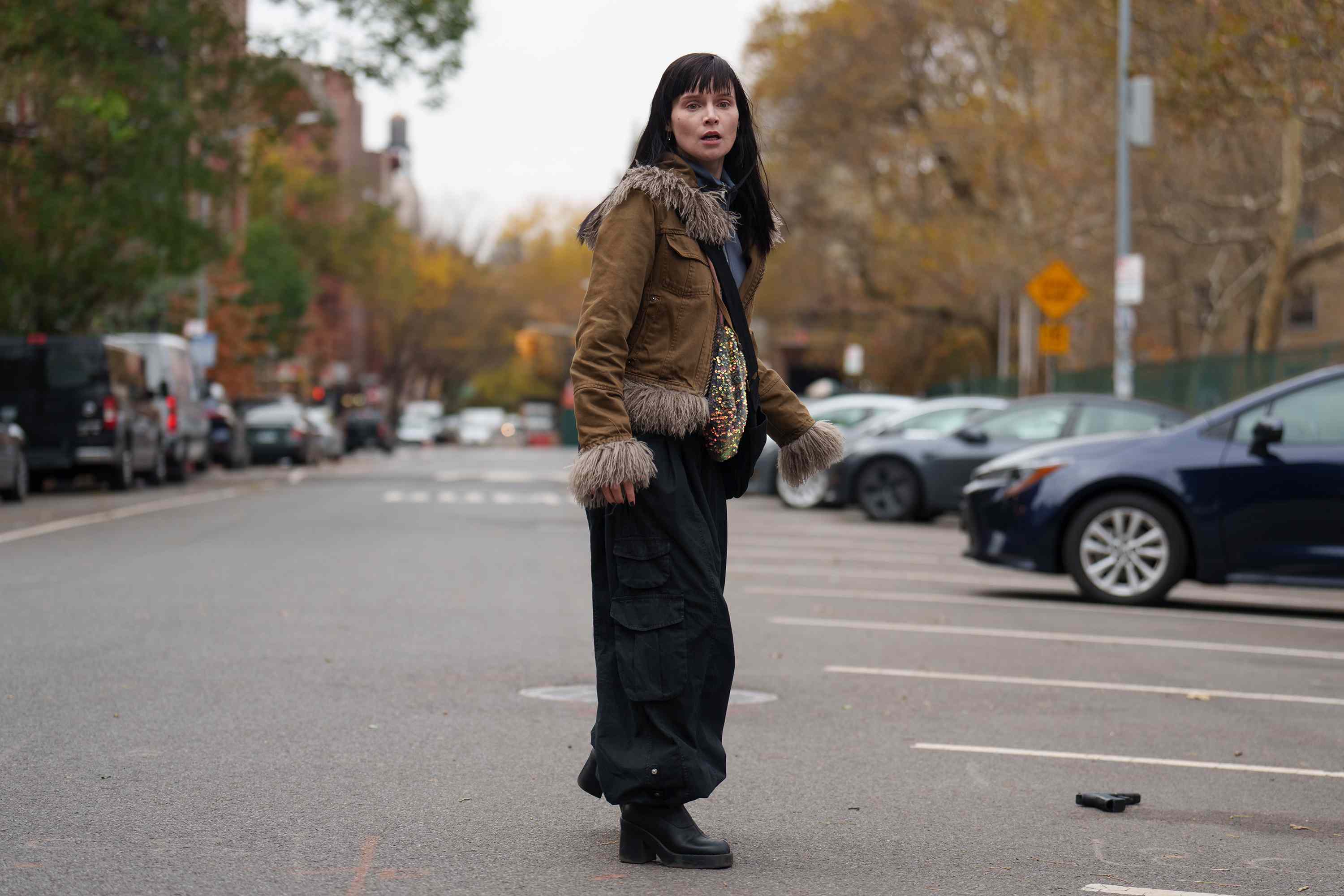
If you’re not watching Hulu’s Furious, you’re missing out. Not just on one of the best shows of the year, but also on some of the most nostalgic outfits. Catherine Grace, the serial killer at its center, dresses like a teenager from the late aughts: a heart-appliqué tee layered over a striped long-sleeve, a satin track jacket, a fur-collared corduroy coat, skinny jeans, black nail polish, eyeliner applied with rage (fury, you might say). She carries a sequin bag. She stores her fentanyl in a bedazzled pencil case. She’s in her twenties, but she looks like she’s about to burn a CD for a boy who won’t appreciate it.
Catherine’s wardrobe is deliberate. She was sex-trafficked as a teenager. We don’t know the exact timeline, but we know a specific tragedy struck in 2012. One episode hints that—before she fell into the dark world of child trafficking—she was happy at a group home. Or at least, as happy as someone in her situation could be. So it’s reasonable to believe the last time she felt OK was around 2009, just before the trafficking began. Now, she’s a grown woman still dressed for a high school she never got to finish. Costumes tell you who a character wants to be. Catherine wants to be a preteen again.
So, we understand Catherine’s sartorial choices. But explain this: why do I also dress like a teenager from the late aughts? At least, when I’m not in athleisure. I’m 35, and I still wear my Forever 21 (may she rest in peace). I still layer a lace cami under a graphic tee to daycare pickup. Because I literally have a baby.
Maybe once I find a look that works, I stick with it? Or maybe I’m just not a fashion-forward person, and this is what’s in right now. The Y2K revival has spent the last three years putting the entire contents of my 2009 Facebook albums back on the racks. This isn’t just me and my Depop search history. Trend forecaster Mandy Lee called the indie sleaze comeback on TikTok in 2021, and she was right on schedule: By this year, the look had traveled from the mustiest corners of Vinted to the Alexander McQueen runway to the Urban Outfitters sale rack. Skinny jeans are back. Skinny jeans tucked into boots are back. Chunky belts worn over dresses for no structural reason are back. Side bangs are back.
"If Catherine is frozen in the last era before her personal catastrophe, then millennials are collectively frozen in the last era before our shared one."
Advertisement
Why? Maybe for a similar reason. If Catherine is frozen in the last era before her personal catastrophe, then millennials are collectively frozen in the last era before our shared one. Think about what the aughts actually were: the time before the group chats about fascism. Before the word “unprecedented” got worn down to a nub. Before social media stopped being a place to post 200 nearly identical photos of your friends and became a place to monitor the collapse of everything in real time. We are not wearing low-rise jeans because they are comfortable. (They are not.) We are wearing the uniform of the last time the future felt hospitable.
I don’t say this to compare the woes of my generation to Catherine’s. Furious is careful never to flatten her story into everyone’s story. What happened to her is singular. But one of the show’s strengths is that women’s fury is not. Women’s fury is universal. Alice, the FBI agent hunting her, carries the damage of an abusive ex. Nora, the head of the FBI’s sex crimes unit, is jaded after years of abusive male coworkers. Emma, the daughter of a wealthy finance scion, comes from a chillingly evil family.
The show reminds us that one woman’s pain is never just one woman’s pain. That was the point of the #MeToo movement: We didn’t condense our experiences into hashtags to flatten them; we did it to universalize them, to tell the world this has happened to all of us. When stories of women’s suffering grab our attention (right now, I’m thinking of the Lindsay Clancy discourse), it’s not because we relate to the details. It’s because many women have suffered enough to relate to the rage.
"We are wearing the uniform of the last time the future felt hospitable."
If our rage is collective, so too is our nostalgia. Catherine’s story is extreme; her closet is not. You may not recognize her life, but you recognize the eyeliner. The costuming takes a character whose experience sits at the outer edge of human suffering and hands the audience one small, ordinary thing to hold: She got dressed the way we got dressed, before it all went to shit. The clothes are more than just attire. They’re a séance. We’re all trying to contact the person we were the last time things were fine.
on Real Simple
Source: “AOL Entertainment”
